
AI for Mobile Development
AI Mobile Apps: From Prototype to Store Release
Prepare an AI-assisted mobile prototype for release. Check devices, data, backend services and store materials with a concise, practical delivery checklist.
Updated: 2026-10-20
A working demo is one stage of the product
Opening a screen is a useful start. Before release, show that first use, saved data and recovery after errors also work. Whichever LLM you choose, the delivery goal is the same: a person can complete the core task on a real phone.
Make the final task about delivery
Example brief: Review this habit app’s release candidate. Try first launch, adding a record, restarting and deleting data. List failures with reproduction steps. Identify checks not run; do not add features.
Assign an owner to each issue and verify the fix. Record the build version, device and date. If you target two platforms, do not apply one platform’s result to both.


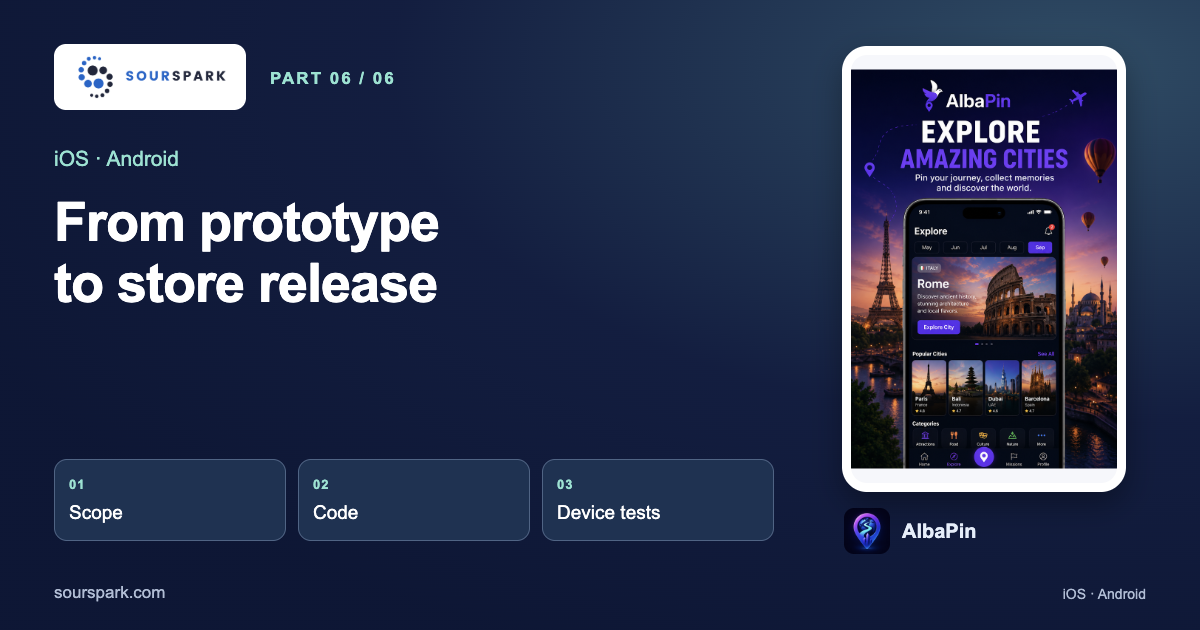
Actual AlbaPin store images illustrate a mobile interface. They do not imply that AlbaPin was developed with the tools discussed here.
How to check the result
- What happens when connectivity is lost, permission is denied or the app restarts?
- Do actual data handling, privacy information and deletion behaviour agree?
- Do screenshots match the build, and do review access and support details work?
The product needs an owner after launch
Complete Apple’s and Google Play’s release steps separately. AI-written code does not guarantee acceptance. Decide who monitors failures, pays service bills and maintains updates. This series offers a development method, not a promised launch date or revenue outcome.
Building mobile apps with AI: the series
Explore model selection, development tools and release preparation in six parts. Each article stands on its own; the links lead to the complete series.
Frequently asked questions
Can an AI-assisted app be submitted to a store?
The resulting product must meet the store’s requirements and complete technical preparation. The development tool does not remove review or the developer’s responsibility.
SourSpark
Turn an idea into a product that works on a phone.
Share your audience, core task and iOS/Android goals so we can plan scope, backend, testing and release.
Discuss my app idea