
Game Monetization
How Do Mobile Games Make Money? Ads and In-App Purchases
Explore rewarded ads, ad-free purchases and game economy decisions through Bricks Breaker and Tile Rush, including the flows you need to test.
 Game Monetization
Monetization is not a button added after the game is finished.
“I built a game. Will adding ads make money?” has no universal answer. Players must understand the game, keep playing and find value in its offers. Advertising integration and purchase screens are only parts of that chain.
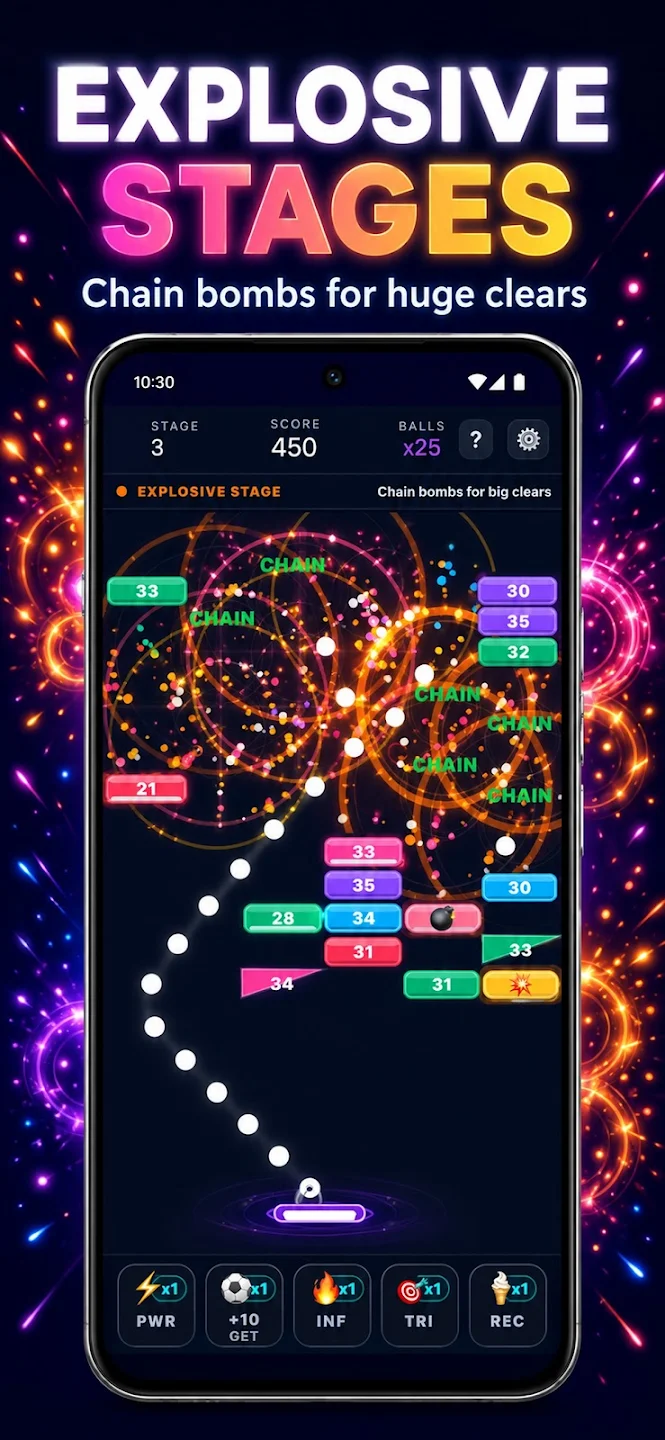
Using modules found in Bricks Breaker Neon Quest and Tile Rush, we can examine how monetization connects to the experience. This article describes technical flows and design decisions, not sales figures.
Advertising or in-app purchases?
Advertising can generate revenue without asking players to pay directly, but uses attention and space in the experience. A purchase needs a clear value proposition. Both can coexist; the balance must still be designed.
Bricks Breaker includes banner, end-of-level and rewarded ad flows alongside ad-free purchase infrastructure. Player eligibility, consent and ad-free access affect ad decisions. The presence of these modules does not establish that ads run every session or generate a particular revenue amount.
Apple describes different business models, including paid, free and in-app purchase approaches. Choose according to product value, not simply because another game uses the same model.
Rewarded ads: Is the exchange clear to the player?
Rewarded ads let users choose an interaction in exchange for an in-app benefit. The offer should make clear what the player receives and when they receive it.
The inspected Tile Rush sources connect rewarded advertising with benefits such as an extra life. Do not assume identical behavior across platforms: the inspected ad service includes an Android condition.
Dismissing an ad and earning a reward should not be treated as the same event. Google’s SDK documentation shows a distinct reward-earned callback. Also test duplicate reward prevention and how the experience behaves when an ad is unavailable.
An ad-free purchase is an entitlement problem.
A payment screen is not enough. Successful, cancelled and pending purchases represent different states. Restoring earlier purchases also needs consideration.
Bricks Breaker’s Adapty integration supports ad-free access and restoration. If that entitlement is active, ad decisions need to respect it. The player’s expectation is simple: the feature they paid for should work and remain accessible.
Test the interface, store product configuration and purchase state together. Including an SDK in the project does not prove that commercial store configuration is complete.
The economy should not force the experience.
Daily rewards, power-ups and store modules are connected. A reward can help progression but also make decisions meaningless; excessive difficulty can make a purchase feel like pressure.
In Bricks Breaker, saved progression, power-ups and daily rewards surround the core game. Evaluate them alongside player decisions. Stacking an ad, an optional reward and a paid offer after failure is a design risk worth investigating—not a claim that this particular problem exists in the project.
How should you evaluate earnings?
Consider behavior and costs alongside total revenue. Revenue from ads inside the game differs from the cost of advertising to acquire users. Gross sales are not the amount left after operations.
There is no universal daily earning or install threshold. Define your measurements clearly. Separate users who see an offer, choose it and receive a reward. Do not group purchase errors with users who simply do not want to pay.
- Does gameplay still work when no ad is available?
- Is the reward granted once, after the correct event?
- Are cancellation, pending and restore states understandable?
- Does ad-free entitlement affect ad decisions?
- Are revenue and acquisition costs tracked separately?
Frequently asked questions
How much money do a thousand downloads make?
There is no fixed amount. Active usage, audience geography, advertising demand, purchase behavior and costs differ.
Are you sharing these games’ revenue results?
This article describes inspected integrations. It does not claim unverified game-specific advertising revenue or sales.
SourSpark
Where should you start with your own product?
Share your store link and the problem you want to solve. Let’s discuss an appropriate scope for the experience, store presentation and growth.
Let’s discuss my project