
Connected Devices & IoT
Smart Vending Machine Software and IoT Architecture
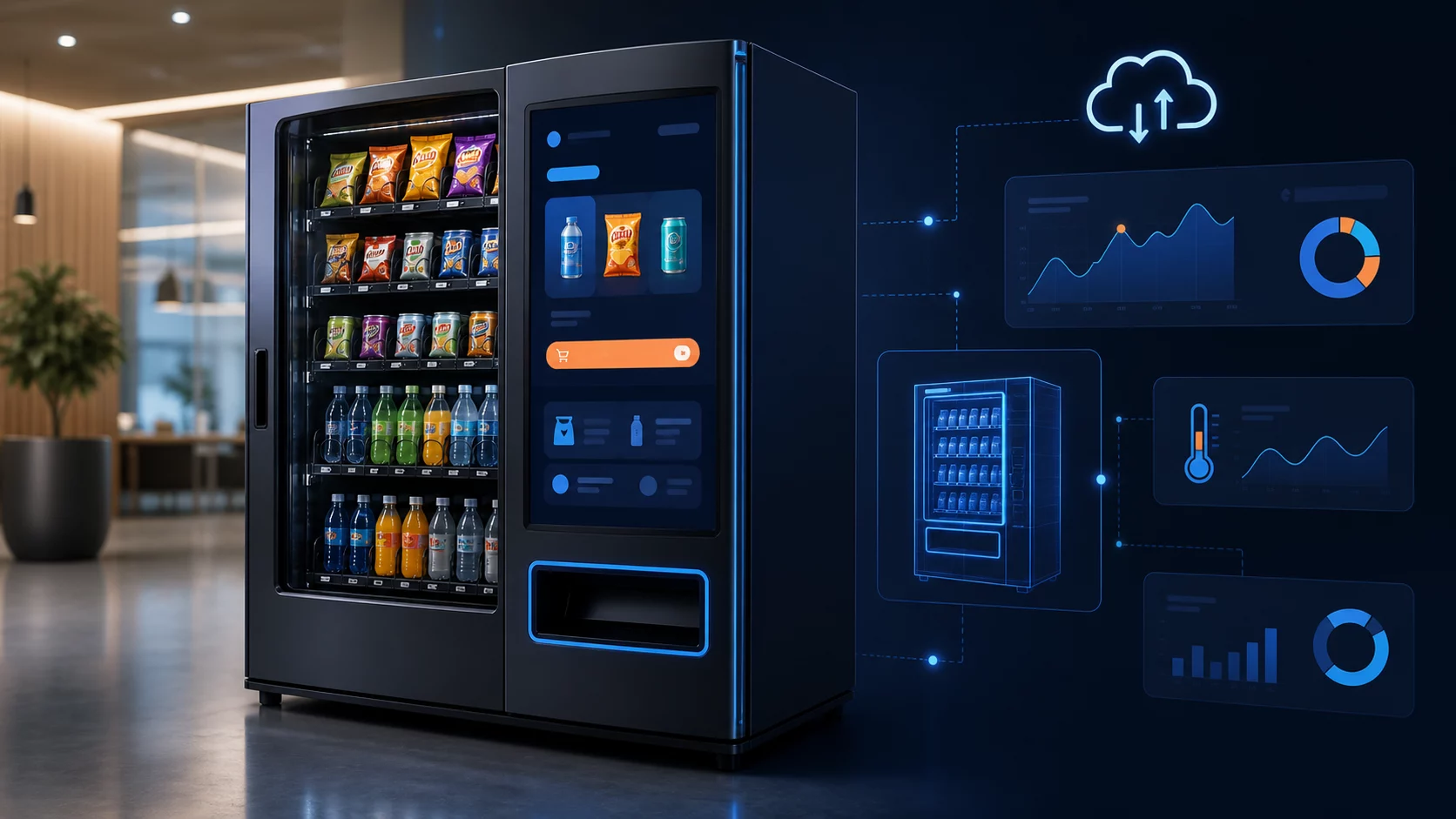
Technical design of smart vending prototype with product catalog, cart, payment, stock, temperature telemetry, remote management and maintenance flows.
Short answer
Remotely managed point of sale, not a vending screen
Smart vending product; it is an IoT platform that manages stock, temperature, door, engine, currency and fault data, as well as touch catalog, basket and payment experience. The goal of the prototype is to show a single sales transaction end-to-end, verify that the product was delivered from the correct bin, and reflect the same transaction on stock and turnover in the management panel.
Hardware and device application layer
The 10–21 inch Android/Linux panel runs the kiosk application. The machine control card manages the motor, spiral, lock, door sensor and cooling telemetry. The panel connects to the control card via RS485, USB Serial, CAN or the manufacturer's available protocol. Whenever possible, the payment terminal is used as a separate device of the certified provider; the vending app only manages the amount, transaction ID, and outcome status. If the product delivery sensor fails, the transaction is not considered completed and a refund or service flow is initiated.
Backend, stock and telemetry architecture
Backend; it may consist of Catalog, Pricing, Inventory, Order, Payment, Device and Alert services. Device configuration and catalog are carried via REST, live device status is transported via MQTT, and management screen updates are transported via WebSocket. Slot-product mapping, current quantity, minimum stock, temperature range and last filling time are kept for each machine. While the telemetry time series is written to the warehouse, trade order data is stored in the relational database.
Offline sales and consistency rules
Catalog and prices can be opened from local cache when the internet is down; However, if the payment provider's offline transaction rules do not allow it, no new payments should be received. Orders are held by unique transaction ID; Resending does not result in double stock reduction. Device commands must carry a sequence number, timeout and clear result code. In case of a power outage, the unfinished order is placed in the reconciliation queue at startup.
Demo software and presentation scenario
Demo; it consists of touch vending screen, control card simulator and web panel. The user selects a drink, confirms the cart, makes a test payment and the engine animation of the relevant compartment runs. Then the stock decreases, a critical stock alarm occurs and a sale appears on the panel. In the second scenario, the temperature threshold is exceeded or the delivery sensor fails; the alarm and remote service log are shown to the operator.
Security, operations and scaling
Devices must be authenticated with a separate identity and certificate, service ports must be closed, and exit to the operating system from the kiosk application must be prevented. Remote commands must carry authorization, an audit trail, and a short validity period. When switching to fleet, device groups, regional catalog, campaign, remote reboot, log collection and gradual OTA are required. Predictive stock and maintenance recommendations should only be implemented after sufficient, clean sales and telemetry data has been accumulated.
Commercial value offered to the producer
The presentation includes not only the modern product display; Warning before stock runs out, remote response to malfunctions, sales performance and fleet visibility are emphasized. The manufacturer can replicate the same hardware with themes, catalogs and pricing rules for different customer brands. Thus, the software expands the after-sales service and regular income capability of the machine.
Frequently asked questions
Is a real payment terminal required in the Vending prototype?
Sandbox payment or simulator can be used in the first experience demo. In a field pilot, a certified payment terminal and the provider's integration rules are required.
Can inventory be calculated from the number of sales alone?
It can be calculated initially; However, for reliable operation, filling record, delivery sensor, cancellation and manual service movements should also be included in the stock model.