
Connected Devices & IoT
Medical Device Display: BLE, USB and Serial Secure Architecture
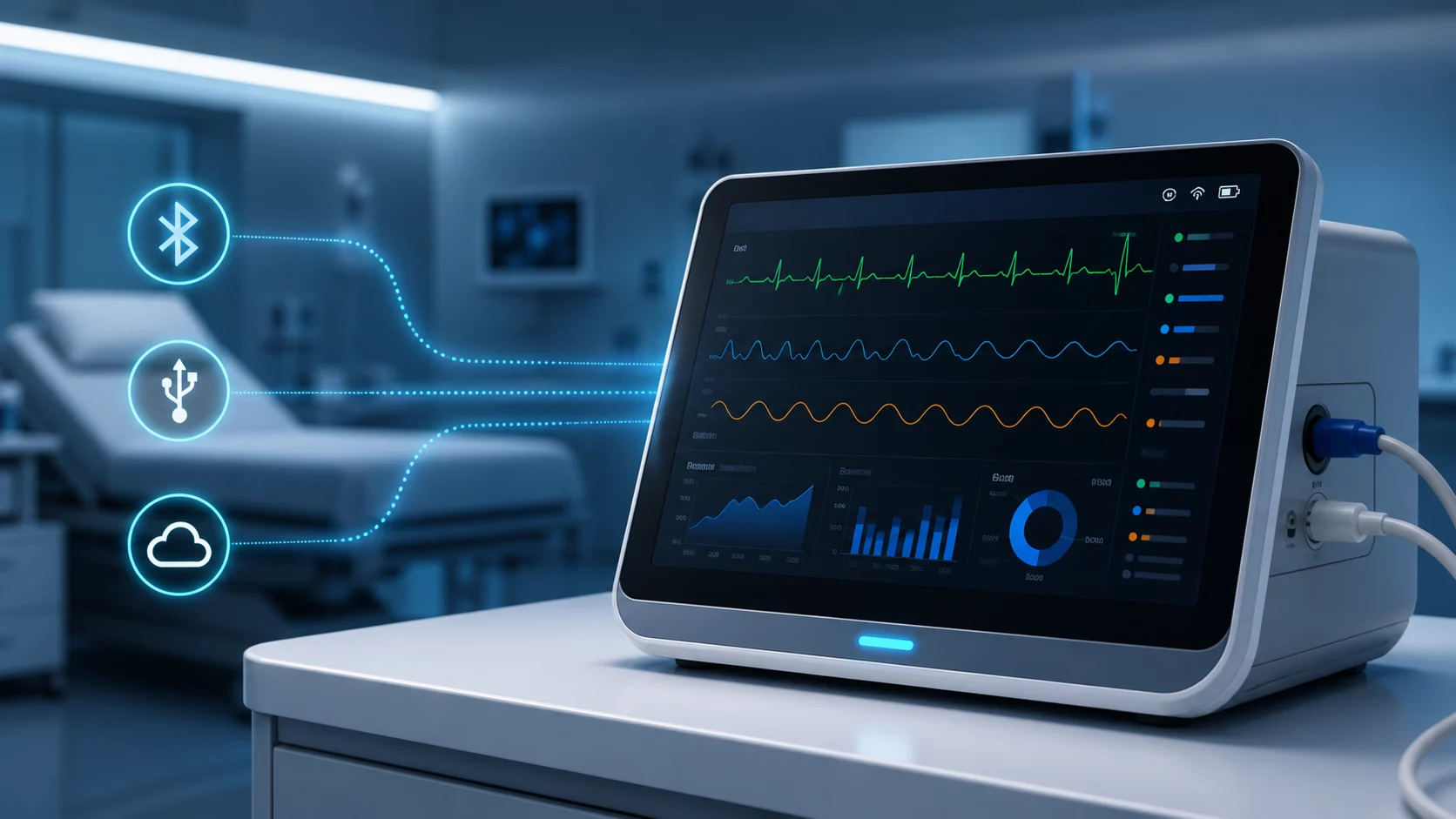
Conceptual prototype and validation approach addressing live measurement, trending, alarming and secure data transfer in the connected medical device interface.
Short answer
The limit of design in medical display
The medical device screen makes the measurement visible and clearly communicates the device status and necessary actions to the user. If clinical decision or treatment functionality is in scope, the software's risk class, usability, and validation requirements change. Therefore, the first prototype should not be considered as a product claim, but as a controlled study evaluating device connectivity, data integrity, display flow and alarm behavior.
Device communication and data integrity
The sensor or subdevice can provide data via BLE, USB or Serial. The adapter layer translates the packet sequence number, timestamp, unit, measurement quality, and device error status into the common model. Broken, old or invalid measurement will not be displayed as normal value. Clinically important calculations carry a clear version and test trail; the display application does not undertake critical sensor control.
Alarm and user interface
Alarm priority should be expressed not only by color but also by icon, textual status and, if necessary, sound. The occurrence, silence, confirmation and closing events of the alarm are recorded. Live value, trend and connection status are separated; Heavy screen decoration should not overshadow critical information. The target user, operating environment, and error results determine the usability testing plan.
Identity, privacy and system integration
Patient or measurement session matching should be done with the minimum required data; Local records should be encrypted and access roles should be separated. User actions create an audit trail. Clinical information system integration is carried out through the standard and contractual API layer; the device must not send data directly to an uncontrolled public cloud service.
Secure demo coverage
The demo may consist only of a device simulator that produces synthetic measurements, a touch screen, and a secure test panel. Normal measurement, sensor break, low quality data, alarm, alarm acknowledgment and reconnection flows are shown. The data on the demo screen does not contain actual patient information and it is clearly stated that the prototype is not for diagnostic or therapeutic purposes.
Verification and regulatory roadmap
Requirements–risk–test traceability should be established at the beginning of the project. Packet corruption, clock drift, power outage, alarm intensity, touch error and update rollback are tested. Commercial medical product development; it requires quality management, risk management, software lifecycle, availability, cybersecurity and authorized compliance processes by device class. The prototype does not replace these processes.
Frequently asked questions
Can this prototype be used directly in the hospital?
No. Conceptual demonstration and engineering validation do not imply approval for clinical use or medical device suitability.
Is BLE sufficient for medical data?
Link selection alone does not provide sufficiency. Data integrity, security, latency, dropout behavior, and device regulatory requirements must be considered together.