
Connected Devices & IoT
Hotel Room Panel: KNX, Modbus and IP Software Architecture
Technical design combining air conditioning, lights, curtains, DND and service requests with in-room panels, building automation and hotel operation systems.
Short answer
Combining the room experience in a single panel
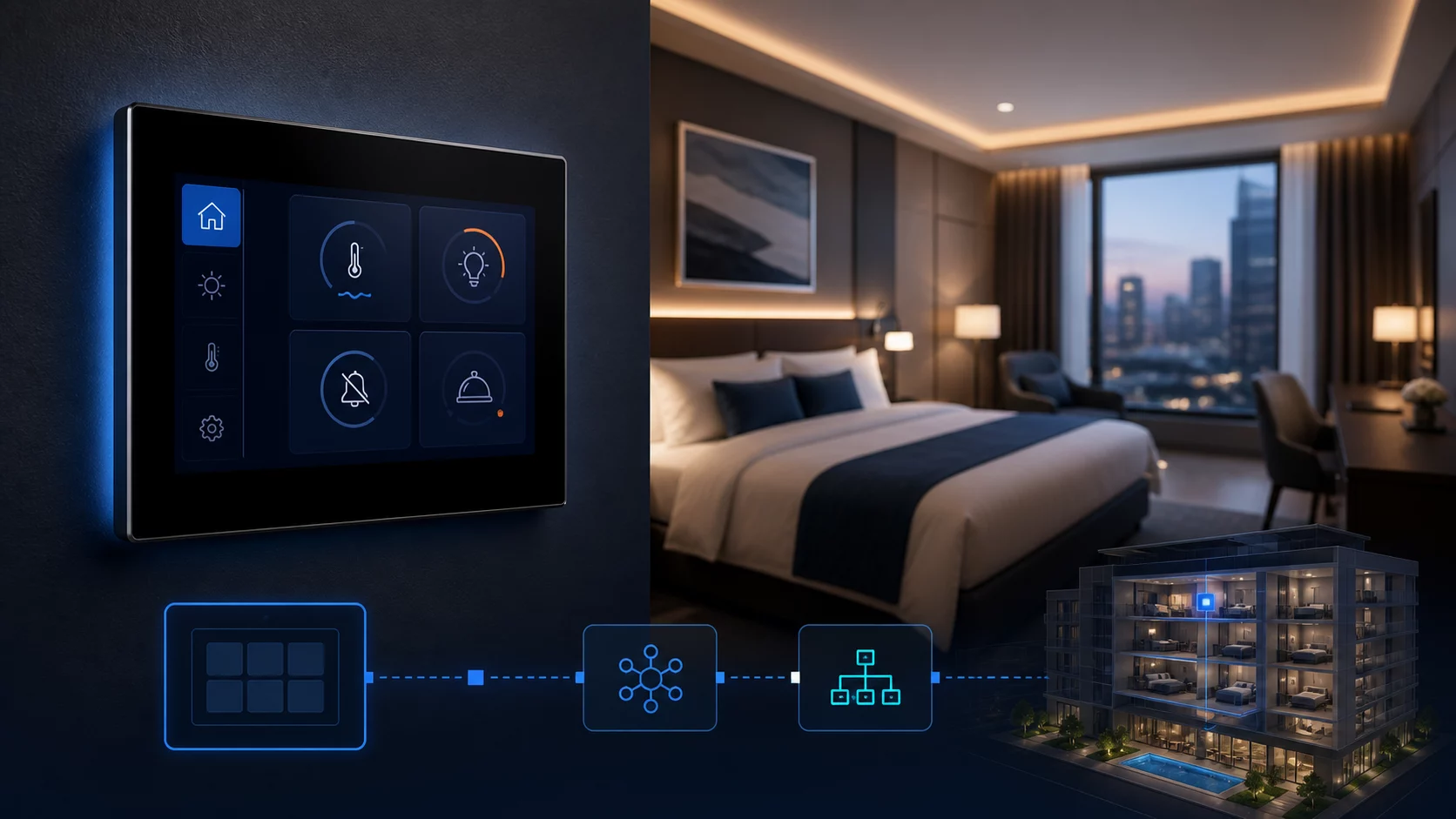
The hotel room panel combines climate, light scene, curtain, do-not-disturb, cleaning and service request functions in a single interface. The aim is not just to make a touch control; to reliably connect the guest experience with the room control system, PMS and operations teams. Basic room controls should work even without internet.
Local control and integration layers
The panel can operate via KNX/IP, Modbus TCP/RTU or the room controller's native API. The adapter layer transforms the light, thermostat, curtain and inputs into a common capability model. Critical comfort functions remain in local automation; the cloud and PMS layer manages check-in, check-out, room status and service events. Each room should have separate device ID and configuration version.
Guest interface and energy scenarios
The main screen simply presents temperature, basic light scenes, curtain and quick service requests. The card holder or occupancy sensor can determine the status of the room and apply an energy saving scene; However, comfort, humidity and equipment protection limits should not be exceeded. DND and make-up-room status should be updated from the same source in the door panel and housekeeping system.
Privacy, network separation and device management
The guest network and the building automation network should be separated, and the panel should only access the necessary services. Room history should not be turned into unnecessary personal data; Service requests should be kept with limited time and role-based access. Signed OTA, secure boot, device certification, and field retrievable configuration deployment required.
Demo software presentation
A demo wall panel can be installed with a KNX or Modbus room simulator and facility panel. The check-in event puts the room in guest mode; the light scene, temperature and curtain are changed from the panel. DND selection falls on the door indicator, service request operation panel. Local controls persist when the network is down; after check-out, the room goes into energy saving and cleaning status.
Pilot and commissioning
A sample room or showroom should be set up first; addressing, scene times, thermostat limits and PMS events must be verified. Power outage, gateway loss, wrong room mapping and OTA fallback scenarios are tested. Success criteria are panel response time, service request delivery, room complaint and change in energy consumption.
Frequently asked questions
Does the room panel work without cloud?
Yes. Basic controls such as light, climate and curtains should work through local automation; the cloud must support fleet, analytics and hotel systems integration.
Can KNX and Modbus be used in the same project?
Yes. The gateway or adapter layer can convert two protocols into a common room model; Addressing and error behavior must be designed explicitly.